
Strategic Relocation Guide
Melbourne and Sydney
to Brisbane
A Strategic Relocation Guide for Your Next Chapter
For Melbourne and Sydney families, executives, business owners and professionals considering Brisbane as part of a broader property, lifestyle and long-term relocation decision.
Tom Pellegrini & Partners
Strategy · Insight · Discretion · Results
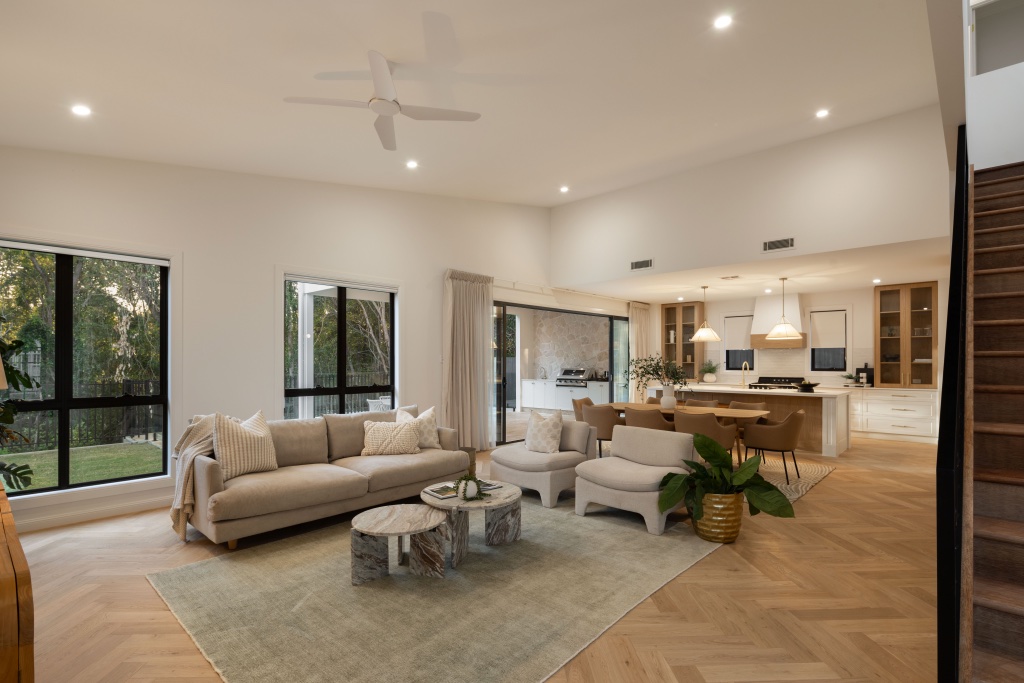
Opening Perspective
Not Just a Move North
Relocating from Melbourne or Sydney to Brisbane is rarely just a change of address.
For many families, executives, business owners and professionals, it is a decision shaped by property, lifestyle, schooling, community, professional requirements, timing and long-term positioning.
Brisbane is increasingly being considered on its own terms. Melbourne and Sydney households may be attracted by similar opportunities, but they do not necessarily begin from the same property, financial, family or professional position.
This guide examines the questions and interconnected decisions that matter most.
General information only. This guide does not constitute legal, taxation, financial, migration, lending, business or investment advice. Readers should obtain independent professional advice tailored to their circumstances before making any significant decision.
The Tom Pellegrini & Partners Relocation Advisory Role
A Strategically Led and
Coordinated Relocation Process
Tom Pellegrini & Partners acts as the lead strategic adviser and central point of coordination for selected clients relocating from Melbourne or Sydney to Brisbane and South East Queensland.
We help clients define the outcome they are seeking, translate their property, lifestyle, family and professional priorities into an integrated strategy, and establish the sequence and decision criteria required to move forward.
Where legal, taxation, finance, lending, migration, education, employment or other specialist advice is required, appropriately qualified independent professionals remain responsible for that advice. TP&P coordinates the relevant workstreams and integrates their inputs into the broader property and relocation framework.
Where appropriate, we work in conjunction with the Prestige division of Harcourts Property Centre in New Farm to support the execution phase of selected property matters.
Throughout the engagement, TP&P helps maintain clarity, alignment and momentum from the initial decision through property execution and transition.
The objective is to make a complex relocation process more structured, coordinated and capable of execution — while keeping material decisions aligned with the client's intended outcome.
TP&P Leads the Overall Strategy
TP&P establishes the decision framework, coordinates the interconnected workstreams, monitors dependencies and timing, and helps keep the overall relocation process aligned with the client's objectives.
Specialists Provide Specialist Advice
Independent lawyers, accountants, taxation advisers, financial advisers, lenders, migration professionals, education specialists and other qualified advisers remain responsible for advice within their respective professional disciplines.
TP&P coordinates and integrates relevant inputs but does not replace regulated or specialist professional advice.
What the TP&P Relocation Strategy Blueprint May Cover
For selected engagements, the strategic process may be documented through a TP&P Relocation Strategy Blueprint. The Blueprint provides a structured reference point for the client's objectives, priorities, dependencies, decisions and implementation pathway.
- Intended outcome and decision criteria
- Property and suburb brief
- Lifestyle, family, schooling and community priorities
- Business, career and travel requirements
- Sale, purchase, funding and settlement dependencies
- Required specialist inputs
- Key risks and unresolved questions
- Inspection, execution and transition milestones
The Blueprint connects the principal components of the relocation process and provides a coherent reference point for decision-making, coordination and execution. It may be prepared for selected engagements and does not replace specialist professional advice.
The Tom Pellegrini & Partners Relocation Process
The five phases describe how TP&P may lead and coordinate the strategic engagement.
Clarify
Define the intended outcome, priorities, constraints and decision criteria.
Structure
Translate property, family, lifestyle and professional objectives into an integrated relocation strategy.
Coordinate
Sequence the workstreams, identify required specialist input and manage key dependencies.
Integrate
Bring relevant property, professional and practical information into the broader decision framework.
Execute & Transition
Support property execution, settlement preparation and the transition into Queensland.
Clarify
Define the intended outcome, priorities, constraints and decision criteria.
Structure
Translate property, family, lifestyle and professional objectives into an integrated relocation strategy.
Coordinate
Sequence the workstreams, identify required specialist input and manage key dependencies.
Integrate
Bring relevant property, professional and practical information into the broader decision framework.
Execute & Transition
Support property execution, settlement preparation and the transition into Queensland.
For selected clients where Tom Pellegrini & Partners is formally engaged, according to the agreed scope.
The Melbourne and Sydney to Brisbane Decision Compass
The Four Questions
Behind the Move
The Decision Compass forms part of TP&P's broader relocation advisory framework. It helps identify the questions that must remain aligned throughout the strategy, coordination and execution of the move.
Successful relocations are rarely driven by one factor. The objective is not simply to move quickly, but to move thoughtfully.
Lifestyle
What daily rhythm, climate, space and community are you seeking?
Property
What asset type, suburb profile and long-term quality are appropriate?
Family
How will schooling, routines, support networks and transition be managed?
Future Positioning
How does the move align with business, capital, career and long-term objectives?
Move Thoughtfully
Lifestyle
What daily rhythm, climate, space and community are you seeking?
Property
What asset type, suburb profile and long-term quality are appropriate?
Family
How will schooling, routines, support networks and transition be managed?
Future Positioning
How does the move align with business, capital, career and long-term objectives?
The right move is rarely driven by one factor. It is usually the point where lifestyle, property, family and future positioning align.
Different Starting Points
Two Starting Points.
One Strategic Decision.
Melbourne and Sydney households may be considering Brisbane for similar reasons, but they begin from different property, lifestyle and professional contexts.
Sydney households may be moving from a generally higher-priced metropolitan property market, greater urban density and a particularly extensive domestic and international aviation network.
Melbourne households may face a different property-value comparison, climate transition and business or family context.
The objective is to understand how each household's circumstances translate into the Brisbane context — not to assume that relocation will automatically create a financial advantage.

Melbourne
Melbourne Perspective
Brisbane may not provide a broad metropolitan price advantage over Melbourne in every dwelling category. Property quality, suburb selection, lifestyle fit and long-term suitability should therefore take precedence over assumptions about affordability.

Sydney
Sydney Perspective
For some Sydney owners, Brisbane may provide different property, land or capital-allocation options. However, outcomes vary materially by suburb, dwelling type, property quality, debt position, transaction costs and individual circumstances.
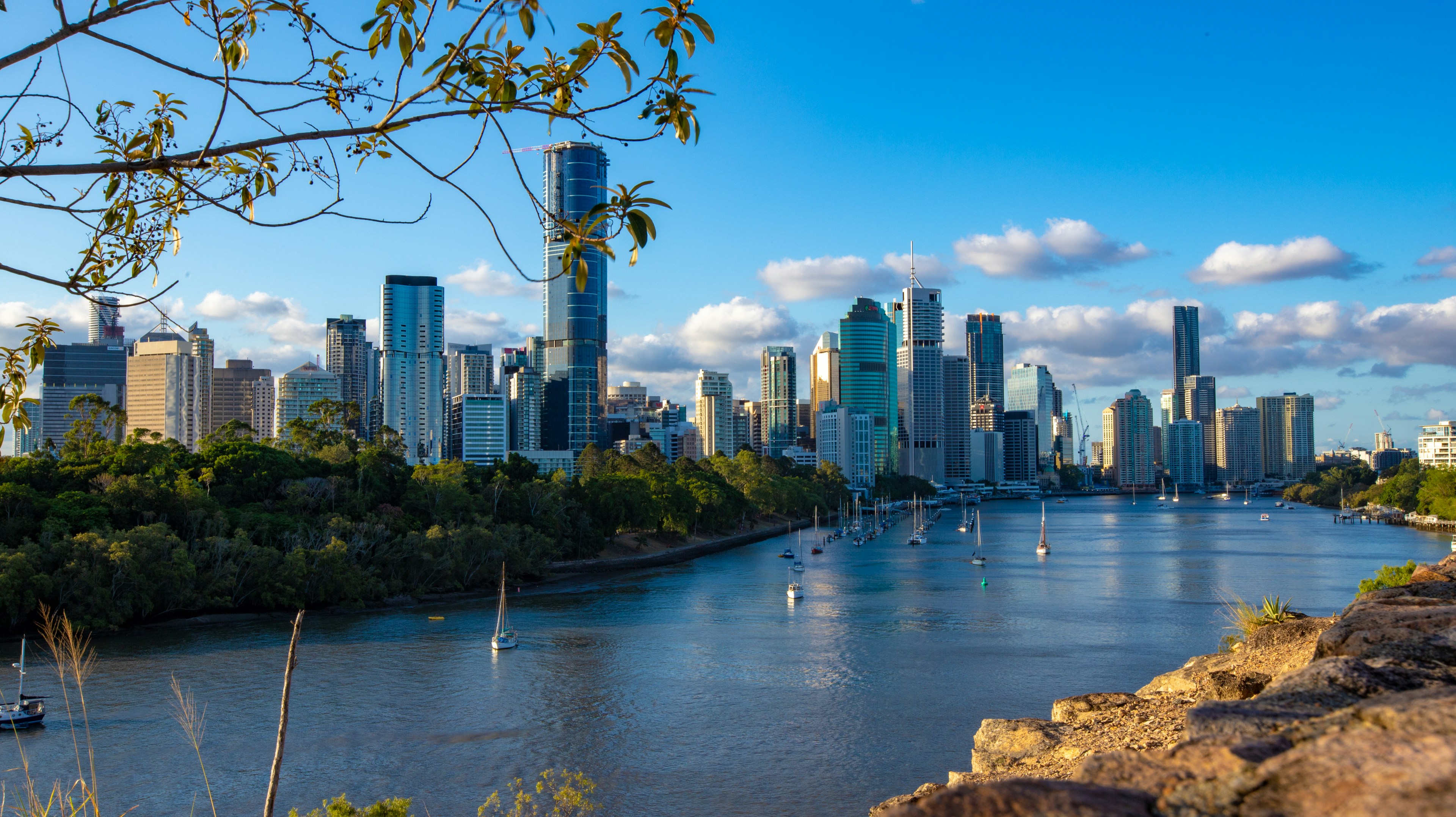
Brisbane's Appeal
Brisbane's Appeal Has Changed
Melbourne and Sydney remain two of Australia's major cities. For some families, professionals and business owners, however, the next stage of life is prompting a reassessment of space, pace, lifestyle, property choice and long-term opportunity.
Brisbane offers a different proposition: a subtropical capital city with growing economic depth, strong lifestyle amenity and access to the wider South East Queensland region.
The relevant question is whether Brisbane is the right fit for the client's objectives, timing, family circumstances and property strategy.
3.8M
People in South East Queensland
Including Brisbane, the Gold Coast, Sunshine Coast and surrounding regions — home to approximately one in seven Australians.
Source: Trade and Investment Queensland, South East Queensland Region Profile. Rounded regional-profile figure; live webpage does not display a specific population reference date. Accessed 2 August 2026.
$201B
Brisbane Economy in 2024
Brisbane's economy reached $201 billion in 2024.
Source: Brisbane Economic Development Agency, 2025 State of the City Report. Accessed 2 August 2026.
274,000
Increase in Employment Since 2020
Brisbane employment increased by 274,000 between 2020 and 2024.
Source: Brisbane Economic Development Agency, 2025 State of the City Report. Accessed 2 August 2026.
$100B+
Greater Brisbane Major Projects Pipeline
Brisbane Economic Development Agency reports a pipeline of major projects exceeding $100 billion, spanning transport, housing, lifestyle and entertainment.
Source: Brisbane Economic Development Agency, 2025 State of the City Report. Accessed 2 August 2026.
Capital City Lifestyle · Regional Access
Brisbane combines a subtropical capital-city setting with access to coastal, island, rainforest and national-park environments across South East Queensland. Practical travel times vary according to the destination, starting point, traffic and mode of transport.
Source: Trade and Investment Queensland, South East Queensland Region Profile. Accessed 2 August 2026.
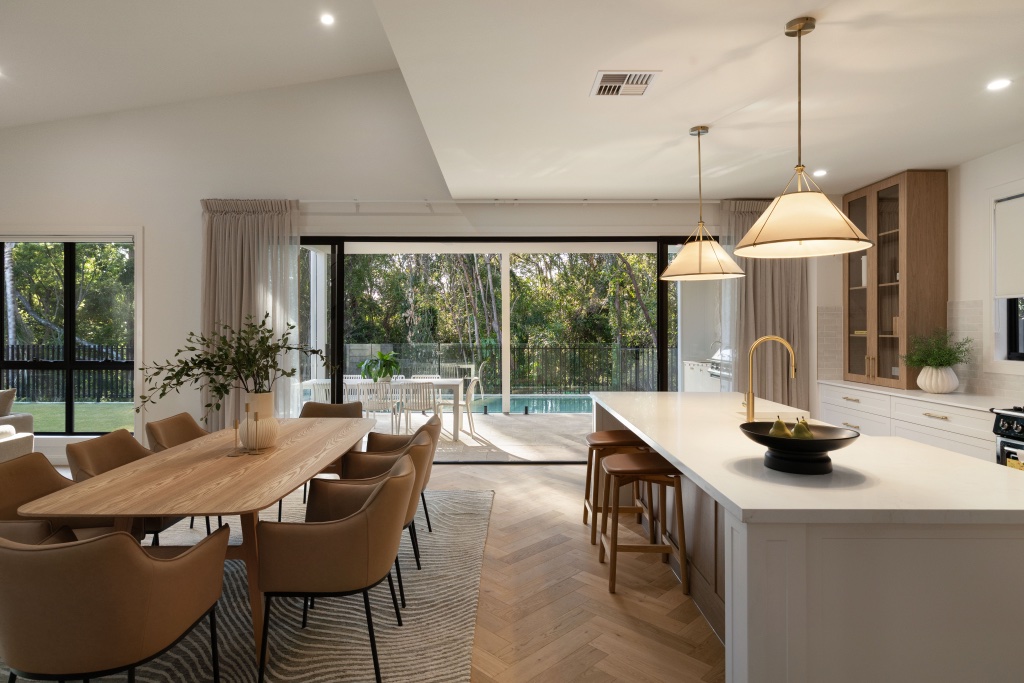
"The decision depends on objectives, timing and personal circumstances."
Why Melbourne and Sydney Households Consider Brisbane
Space, Rhythm and Daily Life
For many Melbourne- and Sydney-based households, Brisbane may offer a different daily rhythm, housing choice and relationship with the outdoors. Whether that represents an improvement depends on the household's priorities, location, budget and everyday routines.
Lifestyle and Climate
Brisbane's subtropical climate and strong indoor–outdoor living culture may represent a genuine lifestyle shift for interstate arrivals. The seasonal rhythm, extended daylight and physical environment differ materially from both Melbourne and Sydney.
Space and Housing Choice
The range of property options — including larger homes, established gardens and more land — may offer different possibilities depending on budget, location and what households are seeking. Outcomes vary materially by suburb, dwelling type and individual property.
Family and Education
Brisbane and South East Queensland contain a range of state, Catholic and independent schooling options. School catchments, curriculum choices, extracurricular opportunities and enrolment processes should be researched carefully and early.
Coastal and Hinterland Access
Proximity to the Sunshine Coast, Gold Coast and selected hinterland regions may be a consideration for households seeking weekend lifestyle access. Individual travel times vary by location and mode of transport.
Asia-Pacific Connectivity
Brisbane Airport offers direct international connections across New Zealand, parts of Asia and the wider region. For executives and business owners with regional or international interests, this connectivity may be relevant to their assessment.
Long-Term Regional Growth
South East Queensland continues to attract population, infrastructure and investment attention. Whether this is relevant to an individual property or lifestyle strategy depends on circumstances, timing and objectives.
Climate Consideration
Brisbane's subtropical conditions may represent a more noticeable transition for some Melbourne households than for Sydney households. In both cases, cooling, orientation, drainage, storm exposure, landscaping, pool maintenance and insurance may affect property suitability and ownership costs.
Property Strategy
Purchasing Power Is
Only Part of the Story
A move from Melbourne or Sydney to Brisbane may create different property options, but purchasing power should not be the only consideration.
Asset quality, location scarcity, street position, school catchments, flood exposure, renovation risk, insurance, future resale depth and suburb character all matter.
The objective is not simply to compare median prices. It is to identify the property that best aligns with the client's lifestyle, financial position and long-term objectives.
Indicative Metropolitan Property Context
| Property Category | Sydney | Melbourne | Brisbane |
|---|---|---|---|
| All dwellings | $1,265,608 | $808,486 | $1,118,306 |
| Houses | $1,556,258 | $948,482 | $1,225,350 |
| Units | $898,623 | $637,170 | $885,132 |
All Dwellings
Houses
Units
Source: Cotality Home Value Index. Estimated median values as at 30 June 2026; released 1 July 2026; accessed 2 August 2026. Figures are indicative metropolitan values only and are not valuations, forecasts or direct suburb comparisons. Individual properties and submarkets may vary materially according to location, land size, dwelling type, condition, buyer demand, transaction costs and market conditions.
Indicative Differences Relative to Brisbane
Sydney: all dwellings $147,302 higher; houses $330,908 higher; units $13,491 higher.
Melbourne: all dwellings $309,820 lower; houses $276,868 lower; units $247,962 lower.
For some Sydney owners, a move to Brisbane may provide access to a different dwelling type, location or landholding, or may release capital depending on individual circumstances.
However, the metropolitan median difference between Sydney and Brisbane units is comparatively narrow, reinforcing the importance of suburb-level and asset-specific analysis.
For Melbourne owners, broad metropolitan values do not support an assumption that Brisbane will necessarily be less expensive.
In both cases, matched suburb and asset comparisons are more meaningful than capital-city medians.
No Exact Suburb Equivalents
A Sydney or Melbourne suburb should not be matched mechanically to a Brisbane suburb. Harbour or bay proximity, land scarcity, architectural character, school access, commuting patterns, flood exposure, local amenity and buyer depth operate differently in each city.
The appropriate comparison should be based on the client's priorities and the qualities of the individual asset — not simply suburb reputation or median price.
Property Transition Questions
Questions to consider with appropriately qualified advisers:
- Whether to sell, buy or retain the existing property
- Settlement, bridging-finance and timing dependencies
- Transaction, transfer-duty and professional costs
- Intended use, ownership and interstate land-tax considerations
- Required legal, taxation, lending and financial advice
Tom Pellegrini & Partners does not provide legal, taxation, lending or financial advice. Readers should engage appropriately qualified professionals for each of these matters.

Decision Compass · Property
Location scarcity, street position and suburb character matter as much as price.
Suburb Pathways
Choosing a Brisbane Base
The right Brisbane suburb depends on more than budget. It depends on lifestyle rhythm, schooling, commute, asset type, community, prestige depth and long-term suitability.
These pathways overlap and are not rankings or fixed classifications. Individual suburbs may be relevant to more than one client objective.
Clients relocating from Melbourne or Sydney should assess Brisbane suburbs on their own terms. Distance from the CBD alone may not reflect actual commute patterns, school access, airport access, river crossings or daily lifestyle suitability.
Inner Lifestyle & Prestige
New Farm, Teneriffe, Ascot, Hamilton, Bulimba, Hawthorne
Established riverside and prestige corridors. Heritage character, boutique amenity and strong market depth. These areas attract buyers seeking established prestige and inner-city proximity.
Family & Education Corridors
Clayfield, Ascot, Indooroopilly, Chapel Hill, St Lucia, Fig Tree Pocket
Established state-school catchments and access to a range of independent schools. The western suburbs corridor — Indooroopilly, Chapel Hill and St Lucia — offers larger family homes and green, tree-lined streets with access to a range of state and independent schools.
Character & Lifestyle Villages
Paddington, Bardon, Camp Hill, Coorparoo
Leafy, character Queenslander homes with strong café culture, community rhythm and shorter distances to the CBD. Particularly popular with families seeking inner-ring character living.
River, Apartment & Lock-and-Leave
Kangaroo Point, Newstead, Teneriffe, New Farm, Hamilton
River-adjacent and inner-city apartment options for executives, downsizers and lock-and-leave buyers. Growing dining and lifestyle amenity alongside established prestige.
Coastal Extension
Noosa, Sunshine Coast & Gold Coast
Travel times from Brisbane to the Gold Coast, Sunshine Coast and Noosa vary materially by starting point, destination, traffic conditions and mode of transport. These coastal markets offer distinct lifestyle and property propositions and should not be treated as extensions of a single Brisbane residential market.
Your Suburb Pathway
The right address is the one that aligns with how you intend to live.
Tom Pellegrini & Partners
Urban Form and Daily Travel
Distance Is Not the Same as Convenience
Brisbane is generally less dense than Sydney and Melbourne, but this does not mean every journey will be shorter or easier.
River crossings, radial road and rail networks, school traffic, employment location and peak-hour conditions can materially affect daily travel.
Prospective residents should test the journeys they will actually make, at the times they will make them.
Journeys to Test Before Committing
Use current timetable and mapping information from TransLink and relevant local authorities for actual journey estimates.
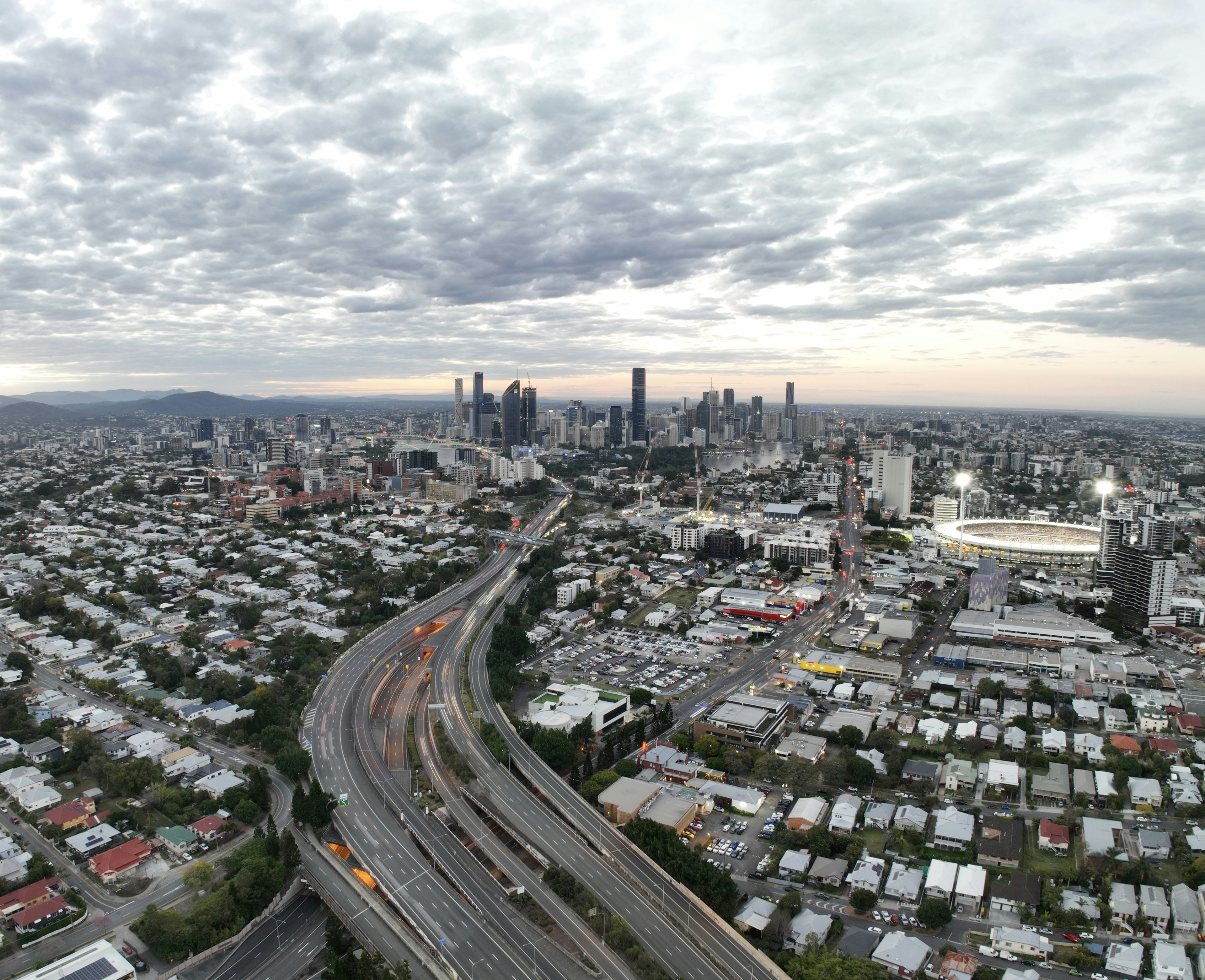
Family Transition
Schools, Community and Settling In
For families, relocation success may depend less on the property purchase itself than on the quality of the transition.
Schooling, commuting, community connection, sporting activities, healthcare and daily routines should be considered before a suburb or property search becomes too narrow.
Practical Checklist
- Confirm state-school catchments and enrolment-management arrangements directly with the relevant school.
- Investigate Catholic and independent school application periods, interviews, assessments and waiting lists.
- Consider commute, sporting and family routines.
- Arrange healthcare and specialist access where relevant.
- Allow time for community and support networks to develop.
Moving During the Senior Secondary Years
Families relocating from NSW or Victoria during Years 10, 11 or 12 should obtain direct advice from prospective Queensland schools before committing to a suburb or property.
Subject equivalence, completed coursework, Queensland Certificate of Education credit, assessment timing, ATAR pathways, enrolment availability and school-specific requirements should be confirmed directly.
NSW HSC, Victorian VCE and selective or specialist school pathways should not be assumed to transfer automatically into the Queensland system.
Sources: Queensland Curriculum and Assessment Authority (qcaa.qld.edu.au); NSW Education Standards Authority (educationstandards.nsw.edu.au); Victorian Curriculum and Assessment Authority (vcaa.vic.edu.au). Individual school advice should be obtained directly.
From Decision to Arrival
From Decision to Arrival — Key Relocation Workstreams
The following workstreams illustrate the interconnected matters that may need to be addressed during a significant relocation. The five-phase TP&P process describes how the engagement may be led and coordinated; these workstreams describe what the relocation itself may require.
Clarify Objectives and Decision Criteria
Define the intended lifestyle, property, family, professional and long-term outcomes.
Define Property, Suburb and Family Requirements
Establish the property brief, preferred locations, schooling, community, transport and daily-life requirements.
Review Sale, Purchase, Finance and Settlement Timing
Consider the sequencing of the existing property, acquisition, funding, bridging and settlement arrangements with qualified advisers.
Obtain Relevant Specialist Advice
Address legal, taxation, lending, migration, education, employment and business matters with appropriately qualified professionals.
Shortlist Locations and Visit in Person
Assess Brisbane suburbs on their own terms and test the journeys, amenities and daily routines that matter.
Conduct Inspections and Due Diligence
Obtain legal advice before signing. Coordinate building and pest inspections and investigate flood, planning, approvals, drainage, insurance and body corporate matters within the relevant contractual timeframes.
Coordinate Settlement, Logistics and Local Support
Plan settlement, removals, utilities, property access, schooling, healthcare, community and professional support.
Review the Transition After Arrival
Allow time for the household to settle before making further significant property or lifestyle decisions.
The best relocations are planned as a sequence, not a scramble.
Business and Career
When the Move Is Also
a Professional Decision
For executives, business owners and professionals, relocation may also involve career, governance, staffing, office, licensing, taxation, legal, finance and advisory considerations.
These matters should be addressed with appropriately qualified advisers. TP&P does not provide legal, taxation, migration, financial planning, employment, lending or business-structuring advice.
Our role is to ensure that relevant professional considerations are identified at the appropriate stage, coordinated with the broader relocation pathway and incorporated into the client's property, timing and transition strategy.
Decision Compass · Future Positioning
Business Structure
Whether to open a Queensland entity, transfer operations or register a branch may need to be considered with qualified legal, accounting and taxation advisers. Transfer-duty and structuring implications should be assessed before any decision is made.
Decision Compass · Future Positioning
ASIC and ABN Registrations
Updating registered business address details with ASIC and the ATO, and relevant payroll-tax and other registrations, may need to be considered with qualified advisers and the relevant authorities.
Decision Compass · Future Positioning
Licensing and Industry Registration
NSW and Victorian occupational, trade, property, construction and professional licences may require mutual recognition, a Queensland application or additional entity-level registration. Requirements vary by occupation, regulator and business structure and should be confirmed before work or trading commences.
Decision Compass · Future Positioning
Team Transition
Staff relocation may involve Fair Work Act obligations and requires professional review where relevant. Redundancy, relocation arrangements, WorkCover Queensland registration and employment law matters should be assessed with qualified HR and legal advisers.
Decision Compass · Future Positioning
Interstate Business Relationships
For some executives and business owners, relocating to Brisbane may require continued access to clients, boards, investors, employees or professional networks in Sydney or Melbourne. Return-travel requirements, hybrid-working arrangements, office presence and relationship continuity should be assessed realistically.
Aviation and Connectivity
Connectivity Depends on Where You Need to Go
Brisbane offers extensive domestic services and a growing international network, including direct connections across New Zealand, parts of Asia and the wider region.
Clients who rely heavily on Sydney or Melbourne's breadth of direct international services should review their actual destinations, service frequencies, connection requirements and travel patterns before relocating.
For some clients, easier access to Brisbane Airport may improve the practical travel experience. For others, reduced direct-route availability may be material.
The relevant comparison is not total passenger volume. It is whether the airport network supports the destinations, frequencies and travel patterns required by the individual or family.
Sydney, Melbourne and Brisbane
Sydney, Melbourne and Brisbane —
Indicative Considerations
| Factor | Sydney | Melbourne | Brisbane |
|---|---|---|---|
| Metropolitan property context | Mature, high-value metropolitan market with significant harbour and coastal premium | Mature, broad and highly diverse metropolitan market | Growing metropolitan market with established prestige, character-dwelling and lifestyle submarkets. |
| Urban form and daily travel | High-density metropolitan form, with significant harbour, coastal and geographic constraints affecting connectivity | Large, broadly distributed metropolitan form; significant suburban spread | Lower density than Sydney or Melbourne; river crossings affect connectivity |
| Climate and lifestyle | Temperate coastal; four seasons, strong outdoor culture | Four-season, temperate capital-city lifestyle | Subtropical; strong indoor-outdoor living culture; higher summer humidity |
| Domestic and international connectivity | Extensive domestic and international network | Extensive domestic and international network | Extensive domestic network and growing Asia-Pacific connectivity |
| Population growth (2024–25) | Greater Sydney: approx. 1.4% p.a. | Greater Melbourne: approx. 2.0% p.a. | Greater Brisbane: approx. 2.1% p.a. |
| Net internal migration (2024–25) | –33,282 | –8,554 | +11,077 |
| Brisbane 2032 context | — | — | Olympic and Paralympic host city; ongoing infrastructure and investment focus |
Population growth and net internal migration figures: ABS Regional Population 2024–25; released 31 March 2026; accessed 2 August 2026. Figures refer to Greater Capital City Statistical Areas.
Net internal migration represents the balance of movements into and out of each Greater Capital City Statistical Area. It does not establish that individual residents moved directly from Sydney or Melbourne to Brisbane and should not be interpreted as a property forecast.
View Taxation Context and Qualifications
| Factor | Sydney | Melbourne | Brisbane |
|---|---|---|---|
| Payroll tax — headline threshold or maximum deduction, 2026–27 | $1,200,000 threshold · 5.45% standard rate · Revenue NSW · 2026–27 | $1,000,000 maximum deduction · 4.85% standard metropolitan rate · SRO Victoria · 2026–27 | $1,300,000 threshold · 4.75% (wages up to $6.5M) / 4.95% (wages above $6.5M) · QRO · 2026–27 |
| General land-tax threshold for non-exempt land | $1,075,000 combined land value of non-exempt NSW land (2026 land-tax year; Revenue NSW) | General rates commence at $50,000 aggregated taxable site value (2026 land-tax year; SRO Victoria) | $600,000 total taxable value for resident individuals at 30 June (2026–27 assessment year; QRO) |
| Principal-place-of-residence context | Generally exempt, subject to eligibility, ownership and occupation requirements. | Generally exempt, subject to eligibility, ownership, use and occupation requirements. | A home exemption may apply, subject to eligibility, ownership, occupation and use requirements. An application may be required. |
Payroll Tax — Notes
Payroll-tax thresholds, deductions and rates are not directly interchangeable. Interstate wages, grouping arrangements, part-year employment and other circumstances may affect the available threshold or deduction.
Victoria's $1 million amount is a maximum deduction. It phases out for employers and groups with total annual taxable Australian wages between $3 million and $5 million, and no deduction is available above $5 million. A lower rate may apply to eligible regional Victorian employers, and payroll-tax surcharges may apply to larger employers.
Eligible Queensland regional employers may receive a one-percentage-point rate discount until 30 June 2030. A mental health levy may also apply above the relevant wage thresholds. Figures should be verified with the relevant state revenue authority and an appropriately qualified adviser before a decision is made.
Land Tax — Notes
Land-tax thresholds are not direct property-price comparisons. NSW generally uses the combined value of non-exempt land and a three-year average of unimproved land values. Victoria uses aggregated taxable site value. Queensland uses total taxable value based on the relevant annual land valuation and applicable averaging provisions.
The stated Queensland threshold is for resident individuals. A $350,000 threshold and different rates may apply to companies, trustees and absentees. Trust, company, foreign-owner, absentee and other ownership rules differ across all three jurisdictions.
Land-tax liability depends on ownership, use, residency, valuation methodology, exemptions and structure. Information should be verified with the relevant state revenue authority and an appropriately qualified taxation or legal adviser.
Useful Resources
Useful Resources
Useful Resources
Residential, Family & Education
- Queensland Conveyancing and Legal (Legal Services Commission)
- Queensland Transfer Duty Calculator (QRO)
- Queensland School Catchments (EdMap)
- Queensland Curriculum and Assessment Authority
- NSW Education Standards Authority
- Victorian Curriculum and Assessment Authority
- Queensland Transport and Main Roads
- TransLink (SEQ public transport)
- Medicare / Services Australia
- Property Search (realestate.com.au)
Business, Professional & Aviation
- ASIC Business Registration
- Australian Taxation Office
- Queensland Revenue Office
- Revenue NSW
- State Revenue Office Victoria
- QBCC Licensing
- Trade and Investment Queensland
- Business Chamber Queensland
- Fair Work Ombudsman
- WorkSafe Queensland / WorkCover QLD
- Brisbane Airport
- Sydney Airport
- Melbourne Airport
- Queensland Flood Information
From Strategy to Execution
Maintaining Clarity,
Alignment and Momentum
A successful relocation depends on more than identifying a property or assembling a list of advisers.
Tom Pellegrini & Partners provides the strategic framework and central coordination that connect the property, family, lifestyle and professional components of the move.
For selected clients, we remain involved from the initial decision framework through location assessment, property execution and transition — helping maintain clarity, alignment and momentum throughout the process.
Where appropriate, we work in conjunction with the Prestige division of Harcourts Property Centre in New Farm to support the execution phase of selected property matters.
The objective is to help clients arrive informed, prepared and supported — with the different components of the relocation working towards the same intended outcome.
Tom Pellegrini
Founder & Director
Strategic Advisor — Prestige Property,
Property Investment, Development & Relocation
Tom Pellegrini & Partners
Francesca Raucci
Director · Client Experience Advisor
Licensed Real Estate Agent
Tom Pellegrini & Partners
Considering a Move?
Considering a Move from
Melbourne or Sydney to Brisbane?
If you are considering Brisbane, Noosa, the Sunshine Coast or South East Queensland as part of your next chapter, Tom Pellegrini & Partners offers confidential introductory conversations for selected clients.
The conversation is an opportunity to clarify the outcome you are seeking, identify the principal property, family, lifestyle and professional considerations, and assess whether a strategically coordinated relocation engagement may be appropriate. For a broader overview, refer also to our Relocating to Queensland Guide.
For selected enquiries, Tom Pellegrini & Partners may provide a privately reviewed copy or a more relevant client-specific relocation strategy document.
Strategy · Insight · Discretion · Results
Sources, Notes & Disclaimer
Verified source information, reference dates and legal qualifications are available below.
Source Register
Cotality Home Value Index
Data: Estimated metropolitan median values · Reference date: 30 June 2026 · Release date: 1 July 2026 · Accessed: 2 August 2026
Australian Bureau of Statistics — Regional Population, 2024–25
Reference period: 2024–25 financial year · Release date: 31 March 2026 · Accessed: 2 August 2026
Data: Greater Capital City population growth rates and net internal migration figures for Greater Sydney, Greater Melbourne and Greater Brisbane.
Trade and Investment Queensland — South East Queensland Region Profile
Data: South East Queensland population of 3.8 million and approximately one in seven Australians · Live webpage does not display a specific population reference date · Accessed: 2 August 2026
Brisbane Economic Development Agency — 2025 State of the City Report
Data: Brisbane economy of $201 billion in 2024; employment increased by 274,000 since 2020; major-project pipeline exceeding $100 billion · Accessed: 2 August 2026
Revenue NSW — Payroll Tax
Headline annual tax-free threshold: $1,200,000 · Standard rate: 5.45% · Period: 1 July 2026 to 30 June 2027 · Page updated: 1 July 2026 · Accessed: 2 August 2026
Revenue NSW — Land Tax
General threshold: $1,075,000 combined land value of non-exempt NSW land · Relevant period: 2026 land-tax year · Principal-place-of-residence page updated: 15 June 2026 · Accessed: 2 August 2026
State Revenue Office Victoria — Payroll Tax
Maximum annual deduction: $1,000,000 · Standard metropolitan rate: 4.85% · Period: 1 July 2025 onward, including 2026–27 · Page updated: 10 July 2026 · Accessed: 2 August 2026
State Revenue Office Victoria — Land Tax
General rates commence at $50,000 aggregated taxable site value · Relevant period: 2026 land-tax year · Rates page updated: 11 December 2025 · Principal-place-of-residence information reviewed: July 2026 · Accessed: 2 August 2026
Queensland Revenue Office — Payroll Tax
Annual threshold: $1,300,000 · Rates: 4.75% (Australian taxable wages up to $6.5M) / 4.95% (above $6.5M) · Period: 2026–27 · Rates verified against QRO calculators updated: 3 July 2026 · Accessed: 2 August 2026
Queensland Revenue Office — Land Tax
Resident-individual threshold: $600,000 total taxable value · Relevant period: 2026–27 assessment year · Home-exemption page updated: 30 June 2026 · Accessed: 2 August 2026
Education Authorities
Queensland Curriculum and Assessment Authority: qcaa.qld.edu.au · NSW Education Standards Authority: educationstandards.nsw.edu.au · Victorian Curriculum and Assessment Authority: vcaa.vic.edu.au
General Information and Disclaimer
General Information Only
This guide is provided for general information and commentary purposes only. It is not tailored to any individual's specific objectives, financial situation, circumstances or needs.
No Professional Advice
This guide does not constitute legal advice, taxation advice, financial product advice, financial planning advice, migration advice, lending advice, credit advice, employment advice, business structuring advice, commercial advice or investment advice of any kind.
No Guarantee
No statement in this guide should be interpreted as a prediction, guarantee or assurance of future property performance, market outcomes, business outcomes or personal financial outcomes. Historical performance and market commentary are provided for general information purposes only.
Independent Advice
Readers should obtain independent professional advice tailored to their circumstances before making any significant property, financial, investment, business, taxation, legal, migration, lending, employment or relocation decision.
Third-Party Sources
Any third-party data, commentary, trademarks or materials referenced within this guide remain the property of their respective owners and are referenced for general information and attribution purposes only. References to third-party sources do not constitute endorsement, partnership or approval.
This guide is maintained as an online strategic resource so that its information, references and supporting links can be reviewed and updated over time.
Copyright
© Tom Pellegrini & Partners Pty Ltd. All rights reserved. No reproduction, republication, scraping, data mining, AI training, commercial redistribution or derivative use is permitted without prior written consent. ABN 76 661 152 450 · ACN 661 152 450
Real estate services are independently provided by Tom Pellegrini & Partners (Queensland Corporate Licence 4933454), Tom Pellegrini (Queensland Individual Licence 4924515), and Francesca Raucci (Queensland Individual Licence 4966241), and may also be provided, where appropriate, in conjunction with Prestige by Harcourts Property Centre.